Living Museum of Learning
Vianna — When Structure Appeared
Vianna's first remote lesson began with many small obstacles.
She had never used Slack, had little experience with Python, and was working on a Windows computer with a newly installed environment. Even creating a new folder became an unexpected challenge.
The first Python file simply went into an existing directory so that the lesson could begin.
The Turtle coordinate system immediately made sense to her.
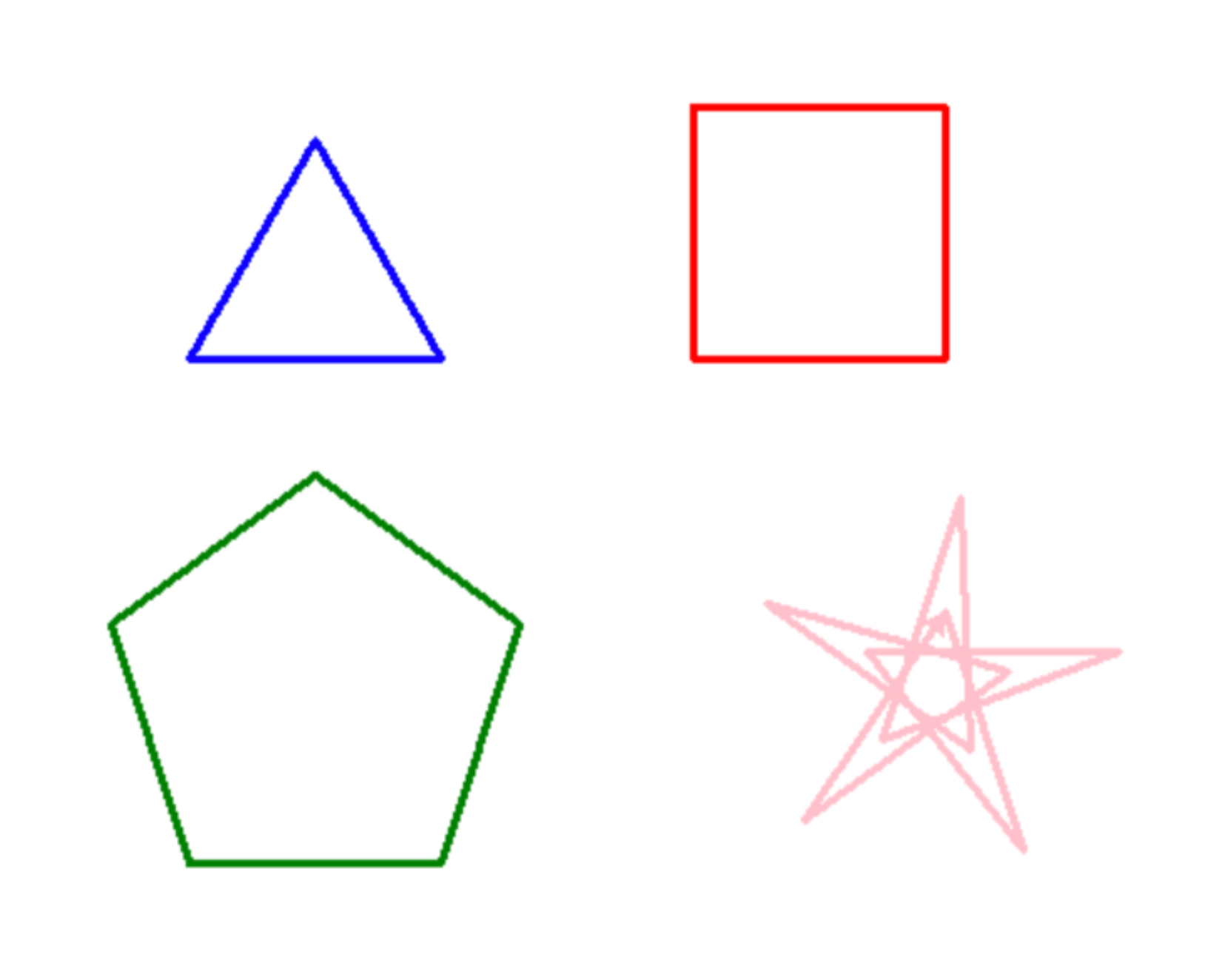
Square.
Equilateral triangle.
Pentagon.
All succeeded on the first attempt.
When drawing an equilateral triangle, many students instinctively turn 60 degrees. Vianna did not make this common mistake.
Later, while drawing a pentagram, she unexpectedly created a second star inside the first.
The "mistake" produced something beautiful.
Instead of correcting it, the drawing was allowed to remain.
After being introduced to the for loop, Vianna immediately began rewriting her own programs.
The code suddenly gained structure.
Repeated actions became loops.
Individual drawings became patterns.
By the end of the lesson, colors, movement, geometry, repetition, and organization had begun to work together naturally.
The student was no longer simply drawing shapes.
She was beginning to think in structures.
Programming often begins long before students understand programming itself.
Coordinates, angles, repetition, and symmetry can emerge naturally through meaningful visual tasks.
A beautiful mistake may reveal more than a correct answer.
A student's first remote lesson can quickly become an exploration of geometry, patterns, and programming.
Visual feedback, simple commands, and repetition allow abstract ideas to become concrete experiences.
Learning to see structure is more important than learning individual commands. Once structure appears, programming becomes a way of thinking.