
Living Museum of Learning
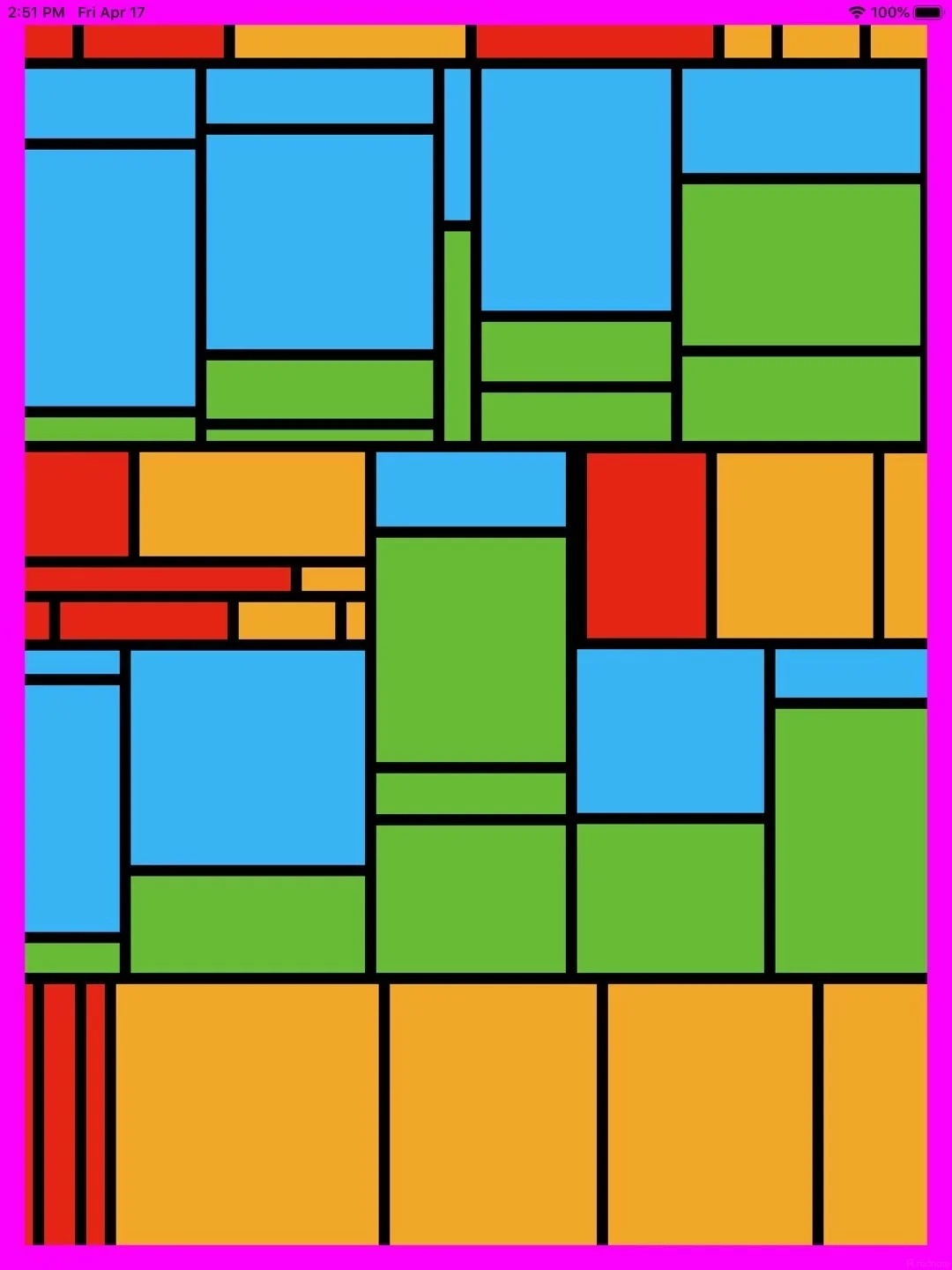
She Used Recursion to Paint Mondrian
Grace grew up in a family that valued learning and intellectual curiosity. Her parents, both graduates of Tsinghua University, provided a rich academic environment, but they never dictated exactly what her interests should become.
By sixth grade, she had already developed strong mathematical ability, artistic sensitivity, and an independent way of thinking.
At the same time, she was learning programming.
During a programming project, Grace explored the visual language of Piet Mondrian: black lines, white spaces, and blocks of primary colors.
Instead of drawing the composition manually, she used recursion.
A region would divide into smaller regions.
Those regions would divide again.
Order and variation emerged simultaneously.
The result was not merely a reproduction of Mondrian's style, but a computational interpretation of it.
Recursion, often introduced as a difficult programming concept, became a creative tool.
Grace discovered that:
simple rules can generate complexity,
repetition can create variation,
mathematics can produce beauty.
The finished image contained both symmetry and asymmetry, structure and surprise.
Code became a medium of artistic expression.
Powerful ideas become accessible when students encounter them through creation.
Recursion was not introduced as an abstract algorithm.
It became a way to divide space, explore balance, and generate visual patterns.
Similarly, modern art was not studied as art history.
It became a source of inspiration for computational thinking.
The boundary between mathematics, programming, and art disappeared.
A middle-school student can use advanced programming ideas such as recursion to create original artistic works.
Abstract concepts become meaningful when students use them to make something personally interesting and visually rewarding.
When programming becomes a creative medium rather than merely a technical skill, students develop both computational thinking and artistic expression.