
Living Museum of Learning
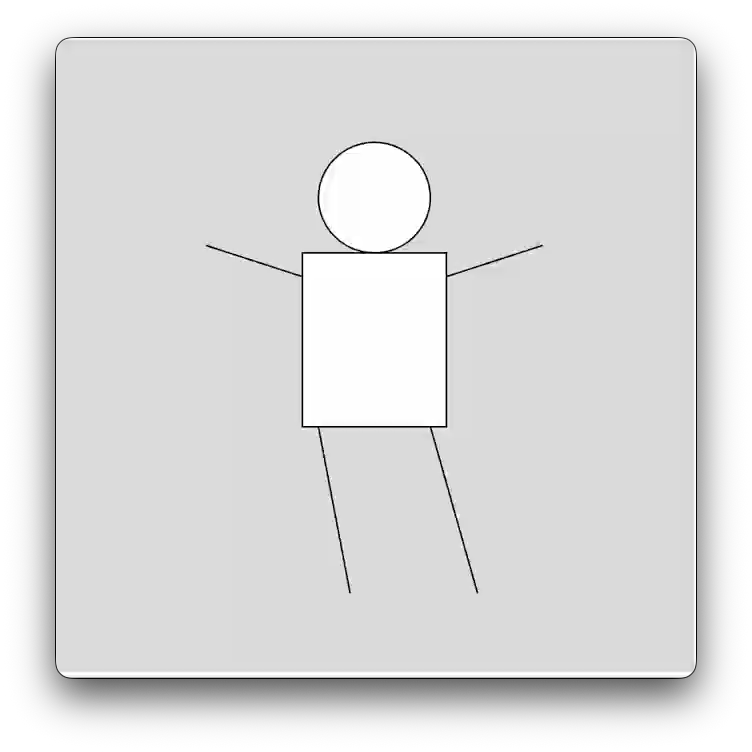
His Stick Figure Started Dancing
Landon's mother often worried about her son.
"督促他学习就是很容易没耐心……看到猴里猴气的就着急上火。"
To her, Landon seemed energetic, impulsive, easily distracted, and difficult to guide. During lessons, his energy sometimes appeared to work against traditional learning expectations.
During an ordinary remote programming lesson, Landon created a square-bodied stick figure in P5JS.
Then he made it dance.
No animation techniques had been taught. No assignment required movement. He simply began experimenting with shapes, timing, and motion until the character came alive.
The entire animation lasted only a few seconds, but everyone immediately remembered it.
What appeared to be restlessness revealed itself as rhythm.
What looked like distraction became movement.
Landon combined geometric intuition, body awareness, and playful experimentation to create animation naturally, without formal instruction.
The dancing figure was not the result of training. It was an expression of his own instincts.
Children who appear "monkey-like" or overly energetic may possess forms of intelligence that traditional instruction fails to recognize.
Creativity often appears first as movement, play, imitation, humor, or physical expression.
When these impulses are suppressed, they become behavioral problems.
When they are given room to emerge, they become artistic, mathematical, and computational thinking.
The teacher did not teach Landon how to dance.
The environment simply allowed his ideas to move.
A highly energetic child can discover animation, rhythm, and artistic expression through programming.
Open-ended creative tools such as P5JS allow physical intuition and playful experimentation to become visible.
Traits that adults sometimes label as distraction or restlessness may become important sources of creativity when given the right environment.