
Living Museum of Learning
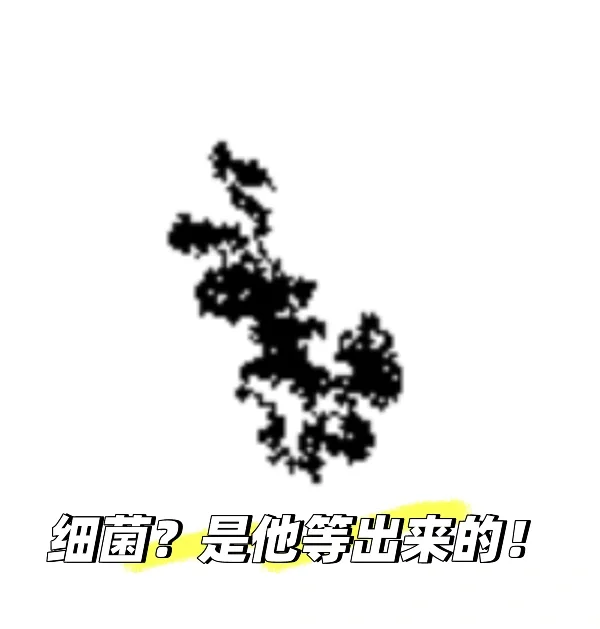
“A Bacterial Path” — Oliver Waits for Emergence
Oliver wrote a simple turtle program: from turtle import * import random for i in range(100000000): fd(1) rt(random.randint(1, 360)) Then he did something important: He didn’t interfere. He simply watched.
As the program ran, the turtle began to trace a chaotic path across the screen. Oliver waited. After a while, he suddenly said: “Bacteria!” He had seen something unexpected — a structure inside randomness. He took a screenshot and suggested using it as a cover image.
What appeared on the screen resembled a microscopic world: branching paths clustered movement organic spreading patterns Mathematically, this is a simple 2D random walk. But visually, it became something else: a living system-like pattern emerging from randomness.
Simple rules can generate complex behavior
Randomness can produce recognizable structure
Computation can model natural systems
Observation is part of thinking, not separate from it
Children can discover scientific metaphors without being told
Emergence requires time and patience
This moment is not about code execution.
It is about a shift in perception:
Oliver did not just run a program — he waited for something to appear that was not explicitly designed.
He saw pattern inside randomness, and recognized it as something alive.
That is the beginning of computational thinking as observation, not instruction.